

Steel kit homes and investment properties don’t seem like an obvious match. Most investors picture brick veneer in a suburban cul-de-sac. But if you look at the actual numbers, a Class 1A steel kit home on acreage makes a surprisingly strong case, especially when construction costs, maintenance, and insurance are factored in.
Table of Contents
- Bottom lines
- What steel kit homes actually are
- Key benefits for rental property investment
- Financing concerns and how to address them
- Tenant appeal and market positioning
- The long-term ROI case
- My perspective on steel kit home investments
- Build your rental portfolio with Shed-homes
- FAQ
Bottom lines
| Point | Details |
|---|---|
| Lower build costs | Prefab steel kit homes cost 10 to 20% less per square foot upfront than traditional site-built homes. |
| Faster construction timelines | Reaching lock-up stage in weeks, not months, reduces holding costs and accelerates rental income. |
| Durability reduces operating costs | Steel resists pests, rot, and moisture, cutting maintenance expenses significantly over a 20-year hold. |
| Tenant perceptions are shifting | Modern steel homes attract long-term renters seeking durable, contemporary living spaces. |
| Financing requires preparation | Permanent foundations and correct classification are non-negotiable for securing conventional loan terms. |
What steel kit homes actually are
Before you can evaluate the investment case, you need to understand what you are actually buying. A steel kit home is a Class 1A residential dwelling engineered and manufactured off-site, then assembled on a permanent foundation. The structural frame is cold-formed steel rather than timber, and every component is precision-cut to specification before it arrives on your block.
This is where steel kit homes diverge sharply from traditional builds. Consider the key distinctions:
- Timber frame homes rely on site-cut lumber, which introduces variability in tolerances, moisture content, and pest vulnerability from day one.
- Modular homes arrive as completed sections and are craned into position. They offer speed but limit design flexibility.
- Steel kit homes arrive as a flat-pack of engineered components. The investor or builder assembles the frame on site, then completes the fit-out to Class 1A residential standard.
The manufacturing process matters for investors because factory precision translates directly to tighter construction tolerances. Prefab homes achieve 30 to 40% less air leakage than site-built equivalents, which has real consequences for energy bills and NatHERS ratings. Steel is chosen structurally because it does not warp, shrink, or twist over time. The geometry stays true. For a landlord managing a property from a distance, that matters enormously.
Key benefits for rental property investment
The financial case for investing in steel kit homes rests on several compounding advantages, not just one headline figure.
- Lower upfront construction cost. Prefab steel kit homes typically cost 10 to 20% less per square foot than traditional site-built homes. On a $300,000 build, that is $30,000 to $60,000 retained before the first tenant walks through the door.
- Pest and rot resistance. Steel does not feed termites and does not rot when moisture infiltrates a wall cavity. For investors in tropical or coastal Queensland and northern NSW, this is not a minor benefit. It is the difference between a maintenance-free decade and a recurring repair bill.
- Fire safety characteristics. Steel is classified as non-combustible per ASTM E136 standards, and steel melts around 2,700°F compared to timber which ignites at 400 to 500°F. This often translates to lower insurance premiums, a direct operating cost reduction for investors.
- Faster build timelines. Prefab construction methods save 30 to 50% of build time compared to traditional site-built homes. Fewer months under construction means fewer months of loan interest accumulating before rental income begins.
- Reduced maintenance over the hold period. Steel kit homes carry lower ongoing maintenance costs due to their resistance to the three primary causes of structural degradation in Australian climates: pests, moisture, and rot.
Pro Tip: When comparing build quotes, ask for a total cost of ownership projection over 15 years, not just the construction price. The maintenance savings on a steel kit home frequently outweigh the upfront cost difference within the first five years of tenancy.
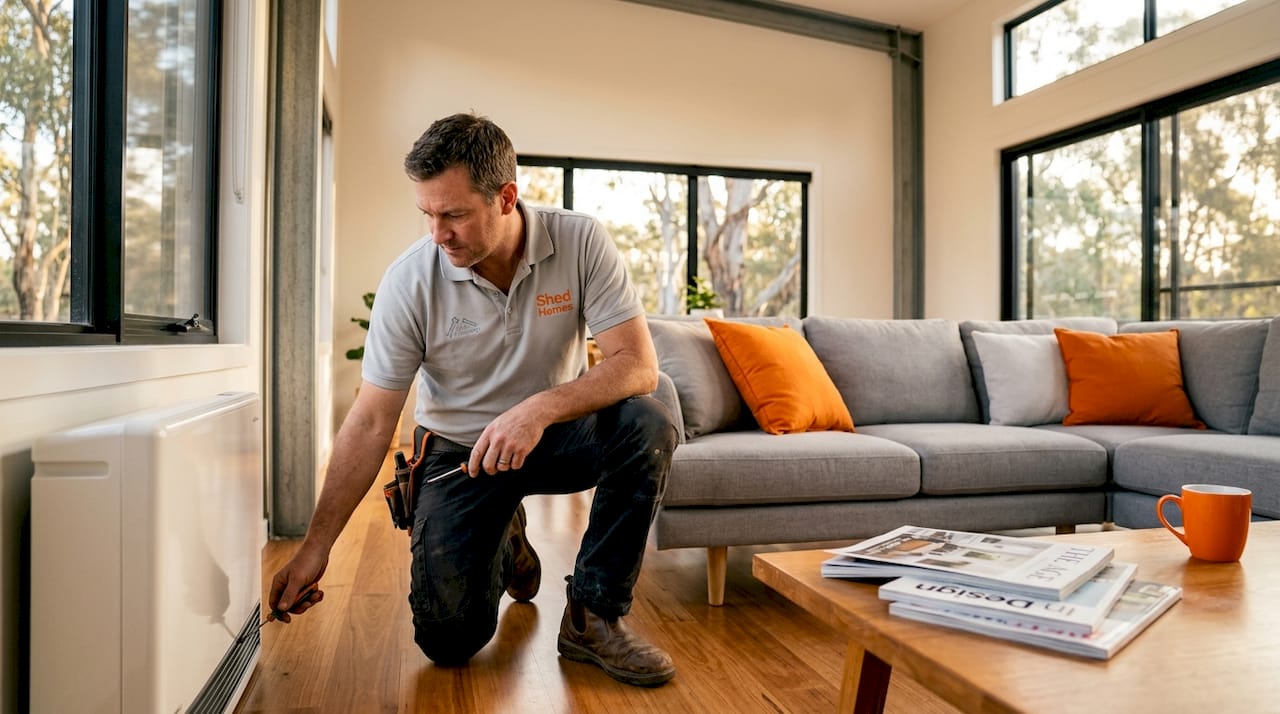
Energy efficiency deserves its own mention. Tighter factory tolerances mean better air sealing, which means tenants pay less to heat and cool the home. In a competitive rental market, a property with demonstrably lower utility costs is a genuine point of difference when attracting quality long-term tenants.
Financing concerns and how to address them
This is where many investors stumble, and it pays to understand the mechanics before you commit capital. Steel kit homes occupy a classification grey area that can complicate conventional lending if you are not prepared.
Many lenders treat steel kit homes similarly to manufactured or non-standard housing. The practical consequences flow from this classification:
- Permanent foundation requirement. The home must be permanently affixed to a concrete slab or equivalent foundation. A home on stumps or a non-permanent base will not qualify for conventional financing under standard lending criteria.
- Real property classification. For Fannie Mae-style conventional loan eligibility, the home must be classified as real property, not personal property. This requires the correct title and foundation documentation.
- Certification and documentation. Lenders require evidence that the structure meets residential building codes. For Class 1A steel kit homes built to Australian standards, this means council-approved plans and a compliant building certificate.
- Engage a specialist broker early. Not all lenders understand steel frame construction. A broker with experience in non-standard builds can identify lenders who assess the property on its merits rather than applying blanket manufactured-home exclusions.
- Insurance structuring. Steel framing’s non-combustible classification can reduce premiums, but only when paired with correctly specified fire-rated assemblies using UL-listed gypsum board layers. Confirm this with your insurer before settlement.
“Without correct foundation documentation and real property classification, a steel kit home can be treated as personal property by lenders, eliminating access to conventional mortgage financing and significantly affecting resale value.” Manufactured housing eligibility
The message here is not that financing is difficult. It is that preparation eliminates the difficulty. Investors who approach steel kit home financing the same way they would approach any non-standard asset, with documentation in order and the right professional advisers, find the process straightforward.
Tenant appeal and market positioning
The old assumption that tenants want timber and brick is fading quickly. The traditional stigma against prefab or steel homes is giving way to genuine demand for modern, durable spaces, particularly among younger professional renters and those seeking acreage lifestyle properties.
Steel kit homes lend themselves naturally to the contemporary aesthetic that attracts long-term tenants. High ceilings, open-plan living, large window spans, and clean industrial lines are all structurally easier to achieve in steel than in timber. Designs like The Kakadu demonstrate how a Class 1A steel kit home can deliver the kind of contemporary visual appeal that photographs well on rental listings and commands premium weekly rents.
| Feature | Steel kit home | Traditional timber build |
|---|---|---|
| Design flexibility | High, open spans achievable | Limited by structural load requirements |
| Maintenance burden for tenant | Low, durable finishes | Moderate, susceptible to wear |
| Energy efficiency | High, tight tolerances | Variable, site-dependent |
| Modern aesthetic appeal | Strong, industrial chic | Traditional, familiar |
| Pest risk | Negligible | Ongoing management required |
For acreage rental markets, steel kit homes are increasingly the preferred choice among tenants seeking durable, low-maintenance rural living. Designs suited to larger blocks, such as The Fremantle, offer the space and structural integrity that acreage tenants prioritise. Single-level designs like The Tweed appeal to a different but equally reliable tenant demographic, including older renters and those with accessibility requirements.
Tenant retention is the metric that most directly affects your yield. A well-designed, low-maintenance steel kit home gives tenants fewer reasons to leave and fewer complaints to manage.
The long-term ROI case
The financial fortress that a well-chosen steel kit home builds for an investor is best understood over a 20-year horizon, not a two-year one.
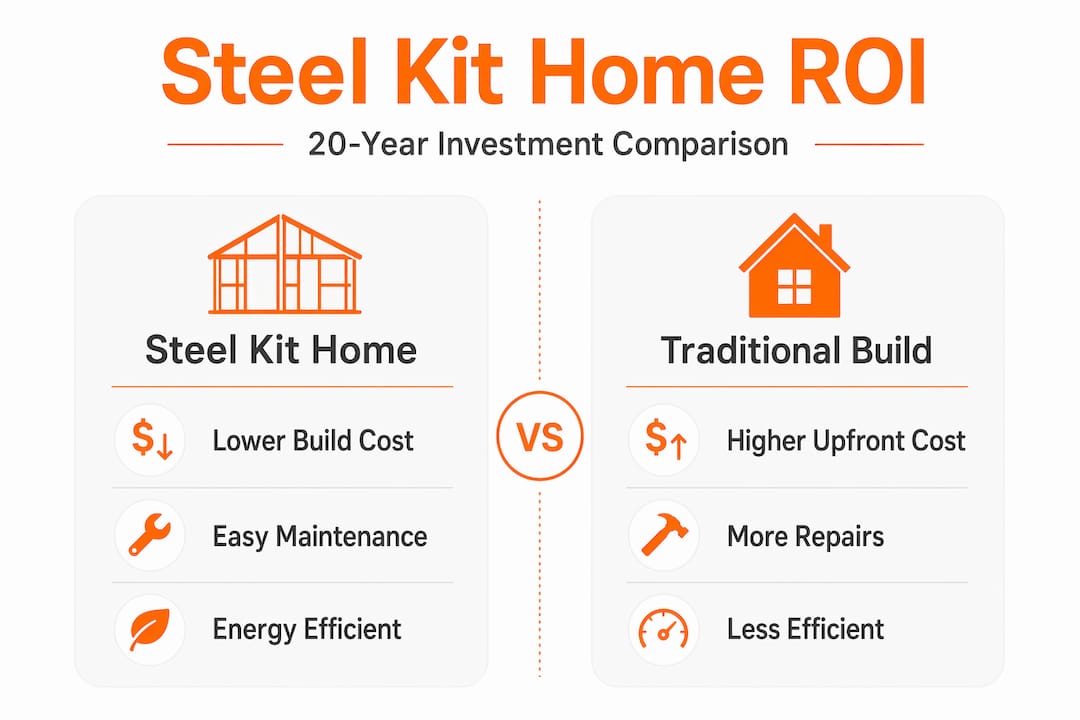
| Cost category | Steel kit home | Traditional site build |
|---|---|---|
| Upfront construction cost | 10 to 20% lower per sqm | Baseline |
| Build timeline | 30 to 50% faster | Baseline |
| Annual maintenance cost | Significantly reduced | Moderate to high |
| Energy costs (tenant-borne) | Lower, better air sealing | Higher, variable |
| 20-year total ownership advantage | $40,000 to $100,000 | Baseline |
We supply the kit. The build is yours or your builder’s, and those figures are a guide only.
The compounding effect of these advantages is where the real investment case lives. Lower construction cost means less capital deployed at the start. Faster build means rental income begins sooner, which directly reduces the effective cost of financing. Lower maintenance means fewer cash calls on the property over the hold period. Better energy efficiency means more competitive rental positioning without reducing your yield.
Resale value deserves honest treatment here. Appraisal stigma around steel and prefab homes is real in some markets, though it is diminishing. The mitigation strategy is straightforward: build to Class 1A standard, obtain council approval, and ensure the property is permanently affixed with full documentation. Properties meeting these criteria are assessed on comparable sales, not construction method.
Pro Tip: If you are targeting a hold period of 10 years or more, the total cost of ownership advantage of a steel kit home over a traditional build becomes increasingly difficult to argue against. Run the numbers over 15 years, not five.
My perspective on steel kit home investments
I’ve watched investors walk past steel kit home opportunities for years because the product did not fit their mental model of what a rental property looks like. That is a costly bias.
What I’ve found consistently is that the investors who do well with steel kit homes are the ones who stop thinking about construction method and start thinking about asset performance. The question is never “is this a steel home?” The question is “does this asset generate reliable income, resist structural degradation, and hold its value over a 20-year hold?” Steel kit homes, built correctly and positioned well, answer yes to all three.
The pitfall I see most often is underestimating the financing preparation required. Investors who treat steel kit homes like a standard residential purchase and only discover the classification nuances after they have committed to a block waste months and sometimes lose the opportunity entirely. Get your broker and your documentation sorted before you sign anything.
Tenant preferences are moving in the direction of these properties, not away from them. The modern, durable, low-maintenance rental is exactly what the next generation of long-term tenants is seeking. That is not a soft observation. It is a structural shift in demand that patient investors can position themselves to capture.
, Shed
Build your rental portfolio with Shed-homes
If the financial logic of steel kit homes for rental investment makes sense to you, the next step is understanding exactly what is available and how the build process works in practice.
Shed-homes offers Australian-made steel frame kit homes engineered to Class 1A residential standard, with comprehensive architectural plans included from the start. Clear pricing, council-ready documentation, and the ability to reach lock-up stage in as little as three to six weeks make Shed-homes a genuinely practical choice for investors who value certainty over surprises. Explore the full range of Class 1A shed designs or review the approval-ready build process to understand exactly what your investment timeline looks like before you commit.
FAQ
Are steel kit homes good for rental properties?
Yes. Steel kit homes offer lower construction costs, reduced maintenance, pest resistance, and strong energy efficiency, all of which support reliable rental yields and long-term asset performance.
What financing challenges apply to steel kit homes?
Lenders may classify steel kit homes as non-standard housing, requiring permanent foundations and correct real property classification to qualify for conventional loans. Engaging a specialist broker early resolves most issues.
How much cheaper are steel kit homes to build?
Prefab steel kit homes typically cost 10 to 20% less per square foot than traditional site-built homes, with total 20-year ownership savings of $40,000 to $100,000 depending on market and energy profile.
Do tenants want to rent steel kit homes?
Tenant demand for modern, durable steel homes is growing. The shift away from prefab stigma means well-designed steel kit homes attract long-term renters seeking contemporary, low-maintenance accommodation.
Are steel kit homes fire safe for rental use?
Steel is classified as non-combustible, but true fire safety requires pairing the steel frame with fire-rated gypsum assemblies per UL-listed designs. When built correctly, this can reduce insurance premiums for investors.
Recommended
- Shed House Australia, Steel Frame Kits | Shed Homes
- Shed Home Build Process | Approval Ready Kits
- Empty Nester Shed Home Designs | Downsize on Acreage
- The Tasman Shed Home Design | Shed Homes Australia
Article generated by BabyLoveGrowth
Ready to start planning your shed home?
Use our free Online Designer to design your layout, or send us an enquiry and we’ll get back to you with an obligation-free quote based on your site address.