
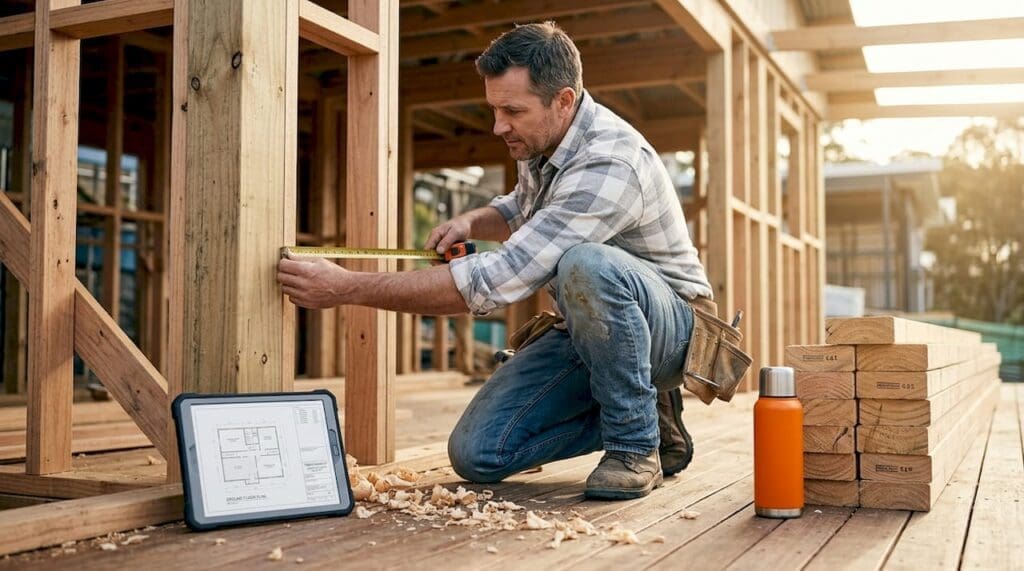
If you’re looking at steel kit homes, you’ll quickly find there are different types, from panelised to modular to hybrid. Each one works differently, costs differently, and suits different sites. Picking the wrong type can mean unexpected costs, delays, or a home that doesn’t fit your block. Here’s how to tell them apart.
Table of Contents
- Bottom lines
- 1. What makes a home kit “precision engineered”
- 2. Key criteria for evaluating home kit types
- 3. Modular home kits
- 4. Panelised home kits
- 5. Timber frame home kits
- 6. Custom precision engineered steel frame kits
- 7. Comparison of kit types at a glance
- 8. Factors that should drive your final decision
- 9. My perspective on choosing the right kit
- How Shed-homes can help you build with certainty
- FAQ
Bottom lines
| Point | Details |
|---|---|
| Kit types vary significantly | Modular, panelised, timber frame, and custom steel kits each suit different sites, budgets, and builder experience levels. |
| Site access is decisive | Panelised kits suit remote or difficult sites; modular kits need crane access and wider transport routes. |
| Assembly complexity differs | Modular homes offer near-turnkey delivery; DIY precision home kits like panelised options allow more hands-on involvement. |
| Cost and customisation trade off | Affordable home kit types often limit design flexibility; custom home kits offer more freedom at a higher price point. |
| Planning early saves money | Consulting local builders and checking council requirements before selecting a kit prevents costly redesigns. |
1. What makes a home kit “precision engineered”
Not all prefabricated home kits are built to the same standard. A precision engineered home kit is one where every structural component is manufactured to exact specifications in a controlled factory environment, then delivered to site ready for assembly. Tolerances are tight. Components fit together by design, not by improvisation on the day.
This matters because factory-built components eliminate the variability that plagues traditional construction, where weather, trades, and material inconsistencies can derail a schedule and inflate a budget. When the wall panel arrives on your block, it is not waiting for a carpenter to measure twice and cut once. It is already cut.
Precision engineering also means the structural calculations have been done upfront. Load paths, wind ratings, and connection details are resolved before a single bolt is tightened on site. For first-time builders, that is not just convenient. It is the difference between a build that passes inspection and one that does not.
2. Key criteria for evaluating home kit types
Before comparing specific kit types, you need a clear set of criteria to measure them against. The right kit for a flat suburban block in Queensland is not the right kit for a remote acreage in New South Wales with a steep driveway and no crane access.
Consider these factors carefully:
- Cost range and inclusions. Some kits quote a base price that excludes foundations, utilities, and finishing. Others include architectural plans, engineering certificates, and council approval documentation. Compare like with like.
- Site access and transport. Modular homes require crane placement and wide transport corridors. Panelised kits arrive on standard flatbed trucks and can reach sites that would otherwise be inaccessible.
- Assembly complexity. Turnkey modular kits minimise your onsite involvement. DIY precision home kits, particularly panelised systems, require more coordination but give you greater control over the build process.
- Design flexibility. Custom home kits allow you to specify room layouts, ceiling heights, and external cladding. Entry-level affordable home kit types often work from a fixed catalogue of designs.
- Delivery logistics. Consider lead times, freight costs, and what happens if a component arrives damaged. A reputable supplier will have clear replacement protocols.
- Energy performance. Some kit systems, particularly those using structural insulated panels (SIPs), deliver significantly better thermal performance than others.
Pro Tip: Before committing to any kit type, contact your local council and confirm what documentation is required for a building approval. Some kit suppliers include approval-ready plans; others leave that entirely to you. Knowing this upfront can save weeks of back-and-forth.
3. Modular home kits
Modular homes are the closest thing to a turnkey experience in the precision engineered category. Factory-built in sections, modular homes are craned onto a site-built foundation with much of the interior already finished. Kitchens, bathrooms, and wall linings may be installed before the module leaves the factory.
The appeal is speed and certainty. Assembly on site can be measured in days rather than weeks, and the factory environment means weather does not delay your build schedule. For buyers who want minimal involvement in the construction process, modular is the natural choice.
The trade-offs are real, though. You need crane access, which rules out many rural and semi-rural sites. Transport dimensions limit the size of individual modules, which can constrain design options. And because so much work is done in the factory, your ability to make changes late in the process is limited.
Pros: Fast assembly, high factory finish quality, minimal onsite labour required.
Cons: Requires crane and wide transport access, limited late-stage design changes, higher upfront cost.
4. Panelised home kits
Panelised kits occupy the middle ground between full modular delivery and traditional stick-frame construction. Wall, floor, and roof panels are manufactured in the factory and shipped flat on standard trucks, then assembled onsite. This approach suits builders who want factory precision without the logistics demands of modular delivery.
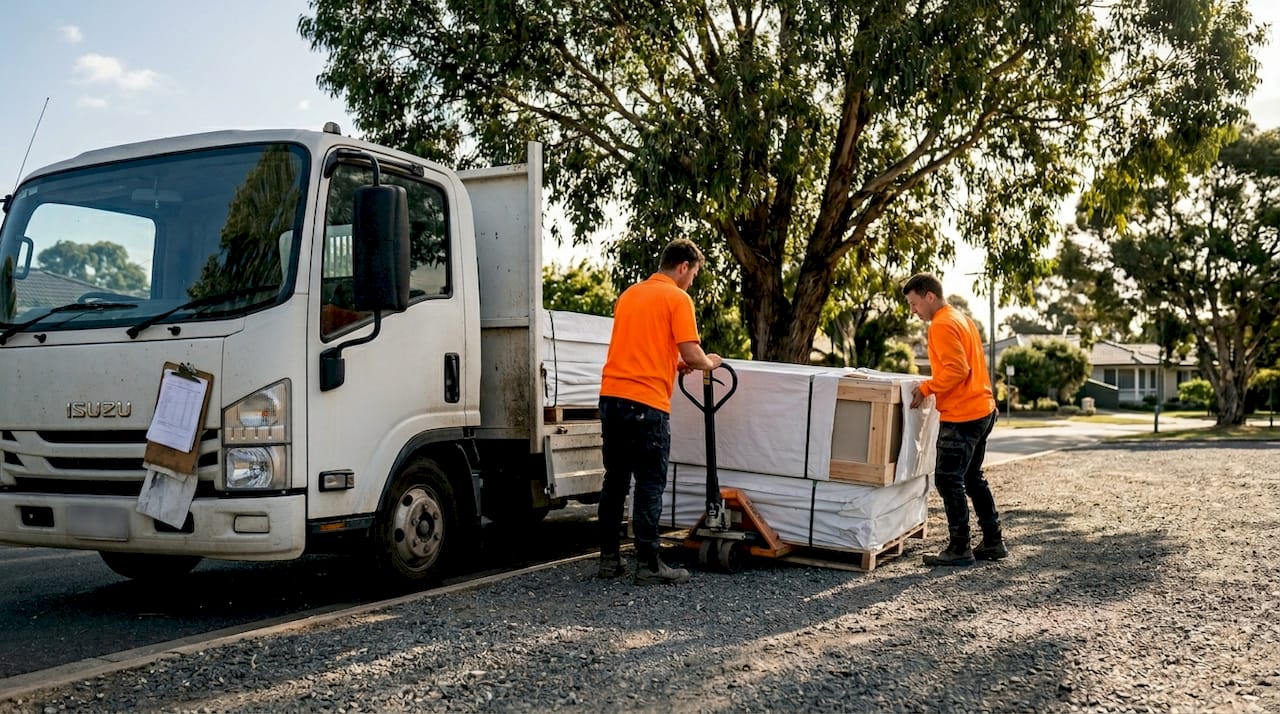
The key advantage is site flexibility. Because panels arrive flat and on standard vehicles, panelised kits suit remote or difficult sites where crane access is impossible or prohibitively expensive. You can build on a steep block, a narrow driveway, or a property hours from the nearest crane hire company.
SIP panels, a common panelised option, are worth understanding in detail. Structural insulated panels bond two rigid boards around a foam core, creating a wall system that is highly energy efficient and airtight. For builders focused on running costs and sustainability, SIP-based panelised kits deliver measurable performance advantages.
Pros: Suits difficult sites, custom floor plans, strong energy performance with SIP panels, good DIY suitability.
Cons: More onsite assembly time than modular, requires skilled labour for panel connections, weather exposure during assembly.
5. Timber frame home kits
Timber frame kits have been around for centuries, but modern precision engineering has transformed them. Components are cut by CNC machinery to exact dimensions, numbered, and packed in assembly sequence. What arrives on site is not a pile of timber. It is a numbered kit that fits together like a three-dimensional puzzle.
Timber frame suits builders who value natural materials, design character, and a degree of DIY involvement. The exposed structural timbers that define the aesthetic also serve as the primary load-bearing system, which means the interior layout has some constraints around where walls can be placed.
Sustainability is a genuine strength here. Timber is a renewable material, and when sourced responsibly, a timber frame kit carries a lower embodied carbon footprint than steel or concrete alternatives. For buyers building in bushfire-prone zones, however, timber frame requires careful consideration of fire ratings and cladding choices.
Pros: Natural aesthetic, renewable materials, good DIY suitability, strong resale appeal.
Cons: Fire rating considerations in high-risk zones, some layout constraints, longer assembly than modular.
6. Custom precision engineered steel frame kits
Steel frame kits represent a distinct category within precision engineered houses. Rather than working from a standard module or panel system, a Class 1A engineered steel kit home is designed from the ground up to meet your specific site, council, and lifestyle requirements. Every structural member is calculated, every connection detailed, and every component manufactured to those exact specifications.
The steel frame system suits Australian conditions particularly well. Steel does not warp, shrink, or provide a food source for termites. In cyclone-prone regions of Queensland and the Northern Territory, a properly engineered steel frame delivers wind ratings that timber and SIP systems struggle to match. The approval-ready kit process means architectural plans, engineering certificates, and council documentation are prepared as part of the package, not as an afterthought.
For first-time builders, the steel frame kit removes a significant source of uncertainty. You know what you are getting, what it costs, and what the council needs to see. That is not soft comfort. It is certainty built into the system from day one.
Pros: Termite-proof, high wind ratings, approval-ready documentation, long service life, suits Australian climate zones.
Cons: Higher upfront cost than basic panelised options, requires professional installation for structural connections.
7. Comparison of kit types at a glance
| Kit type | Cost range | Assembly time | Site access needs | Design flexibility | Energy performance |
|---|---|---|---|---|---|
| Modular | High | Days | Crane and wide roads required | Moderate | Moderate |
| Panelised (SIP) | Moderate | Weeks | Standard truck access | High | High |
| Timber frame | Moderate | Weeks to months | Standard truck access | High | Moderate |
| Custom steel frame | Moderate to high | 3 to 6 weeks to lock-up | Standard access, flexible | Very high | High with insulation |
Assembly timelines vary depending on design complexity, site preparation, and the number of trades involved. The figures above represent typical ranges rather than guarantees. A modular kit on a well-prepared flat site will always outpace a timber frame on a steep rural block, but a custom steel kit with a motivated owner-builder can close that gap considerably.
8. Factors that should drive your final decision
Knowing the kit types is only half the work. The other half is honest self-assessment. Site conditions and lifestyle factors are often more decisive than any feature list.
Ask yourself these questions before you commit:
- What is my site like? Steep terrain, narrow access, or remote location all point toward panelised or steel frame kits. A flat suburban block with easy crane access opens the modular option.
- What is my realistic budget? Not just for the kit, but for foundations, utilities, finishing, and council fees. Affordable home kit types can become expensive when you account for everything the base price excludes.
- How involved do I want to be? If you want to manage subcontractors and be on site daily, a panelised or timber frame kit gives you that control. If you want to hand over and receive a finished structure, modular or a fully managed steel frame kit suits you better.
- Will my needs change? Families grow. Businesses start from home. Some kit types, particularly steel frame designs, accommodate future extensions more readily than others because the structural system can be engineered to accept additional spans.
- What does my council require? Understanding Class 1A vs Class 10A classifications early will determine what approvals pathway applies to your project.
Pro Tip: Talk to a local builder or certifier before you sign anything. They will tell you what council in your area expects, what soil classifications typically look like on your type of land, and whether any overlay or bushfire zone will affect your kit choice. An hour of their time can save you months.
9. My perspective on choosing the right kit
I have seen buyers approach this decision from two very different starting points. Some begin with the kit they find most aesthetically appealing and work backwards to justify it. Others start with their site constraints and budget, then find the kit that fits those parameters. The second group builds on time and on budget far more consistently.
The most common misconception I encounter is that modular homes are always the fastest and cheapest option. They can be, on the right site. But when you factor in crane hire, transport permits for oversized loads, and the limited ability to modify the design once production starts, the apparent simplicity of modular delivery can become a source of friction rather than relief.
Panelised kits, in my experience, suit the widest range of first-time builders. They deliver factory precision without the logistics demands of modular, they accommodate custom floor plans, and they give the owner-builder enough involvement to feel genuinely connected to the build without requiring trade-level skills at every step.
What I find most underappreciated is the value of approval-ready documentation. Builders who receive a kit with complete architectural specifications, engineering certificates, and council-ready plans work through the approval process in weeks, not months. That time saving has real financial value. It is not a minor administrative convenience. It is weeks of holding costs, mortgage payments, and delayed occupancy that you get to avoid entirely.
, Shed
How Shed-homes can help you build with certainty
If you have worked through this guide and you are drawn to the precision, durability, and approval-ready simplicity of a steel frame kit, Shed-homes is worth a close look.
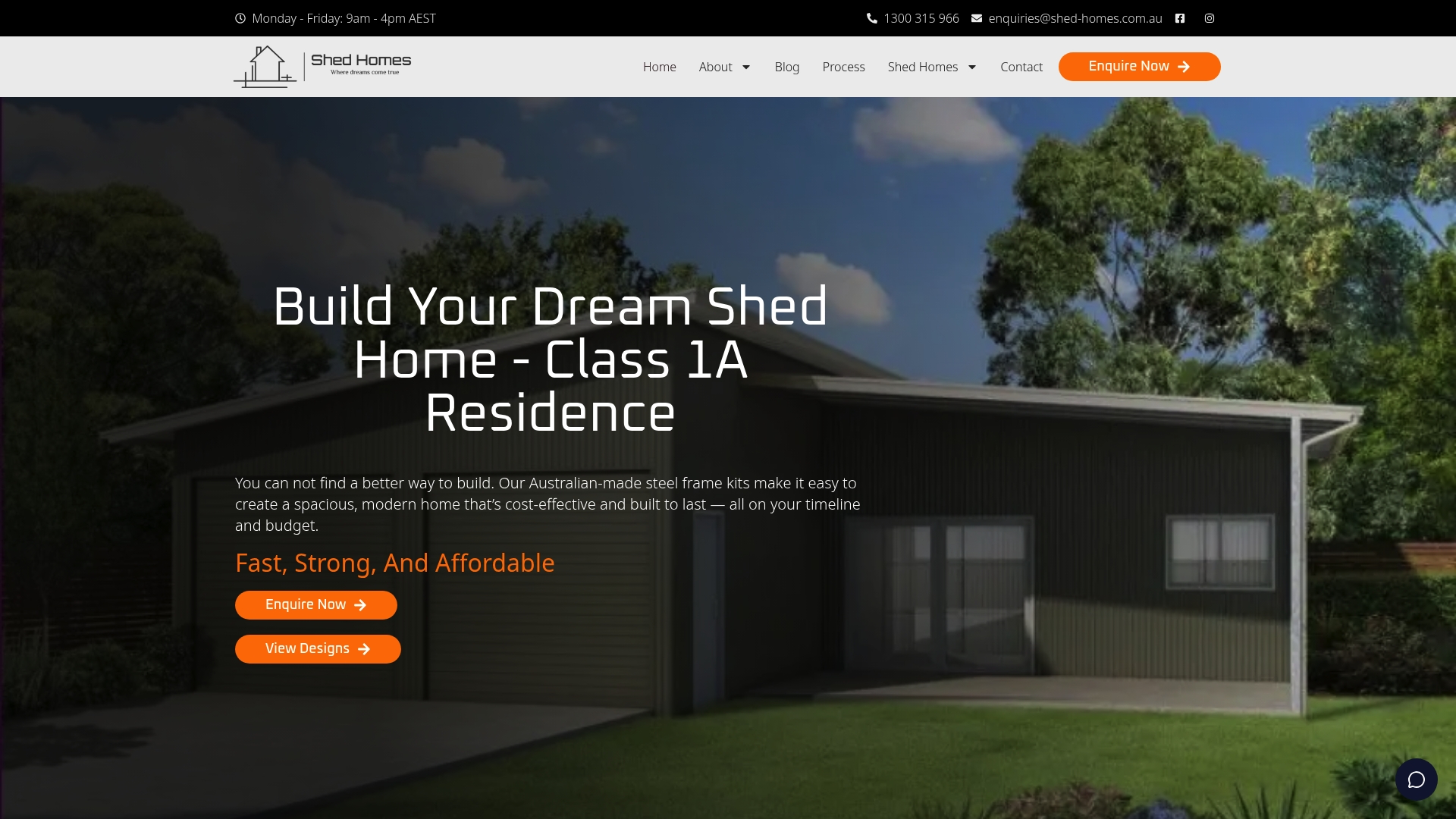
Shed-homes offers a range of Australian-made steel frame kits designed specifically for the conditions, council requirements, and lifestyle needs of Australian owner-builders and families. Every kit includes detailed architectural specifications, engineering certificates, and the documentation you need to move through council approvals with confidence. The build process is structured to reach lock-up stage in as little as three to six weeks, which means your holding costs stay low and your timeline stays real.
Designs like the Tasman and the Noosa demonstrate how a precision engineered steel kit home can deliver genuine liveability without the cost and complexity of a traditional build. If you are ready to explore which design suits your site and budget, the Shed-homes build process page is the right place to start.
FAQ
What are the main types of precision engineered home kits?
The main types are modular kits, panelised kits, timber frame kits, and custom steel frame kits. Each differs in assembly method, site access requirements, cost, and design flexibility.
Which kit type suits a remote or difficult site?
Panelised kits are generally the best choice for remote or difficult sites because they arrive on standard trucks without requiring crane access, making them practical for steep or narrow blocks.
Are prefabricated home kits energy efficient?
Energy performance varies by kit type. SIP-based panelised kits are among the most efficient due to their airtight structural insulation, while steel frame kits with quality insulation also perform well across Australian climate zones.
How long does it take to assemble a precision engineered home kit?
Assembly time depends on the kit type and site conditions. Modular kits can be placed in days, panelised and timber frame kits typically take weeks, and a custom steel frame kit can reach lock-up stage in three to six weeks under managed conditions.
What is the difference between a modular home and a manufactured home?
Modular homes follow local building codes and are classified as real property, while manufactured homes are built to a federal standard on a steel chassis. This distinction affects financing options and long-term property value.
Recommended
- Shed House Australia, Steel Frame Kits | Shed Homes
- Shed Home Build Process | Approval Ready Kits
- Class 1a vs Class 10a Shed Homes Explained
- The Tasman Shed Home Design | Shed Homes Australia
Ready to start planning your shed home?
Use our free Online Designer to design your layout, or send us an enquiry and we’ll get back to you with an obligation-free quote based on your site address.