

Getting the interior layout right is the single most consequential decision you will make when designing a shed home. Squeeze the wrong layout into a compact footprint and you end up with a space that feels cramped, poorly lit, and frustrating to live in. Get it right, and the same square metres feel generous, purposeful, and genuinely comfortable. This article covers the most effective shed home interior layout ideas available today, from open-concept single-level arrangements to lofted two-storey configurations, with practical criteria, style comparisons, and the overlooked details that separate a functional shed interior from a truly liveable one.
Table of Contents
- Bottom lines
- 1. Criteria for designing effective shed home interiors
- 2. Open-concept layouts for small and single-level sheds
- 3. Two-storey and lofted shed home layouts
- 4. Popular interior design styles for shed homes
- 5. Practical tips to optimise shed interiors for comfort
- My honest take on shed home layouts
- Design your shed home with confidence
- FAQ
Bottom lines
| Point | Details |
|---|---|
| Plan infrastructure before finishing | Plumbing runs, electrical, and electrical placement must align with your floor plan before walls are closed. |
| Vertical space is underused | Lofted sleeping areas can recover 80 to 120 sq ft in small sheds, freeing ground-floor living areas. |
| Circulation paths matter as much as storage | Clear pathways between entry and main living zones prevent a shed interior from feeling claustrophobic. |
| Style shapes layout decisions | Your chosen aesthetic, whether Scandinavian minimalist or rustic cabin, directly influences furniture choices and spatial flow. |
| Ventilation must be planned early | Routing vents before insulation is installed avoids costly, disruptive retrofits later. |
1. Criteria for designing effective shed home interiors
Before you commit to any specific layout, you need a clear set of principles to test your ideas against. These are the foundations that separate a well-considered shed interior design from one that looks good on paper but fails in daily use.
- Maximise vertical space. Multi-functional furniture like sofa beds, fold-down tables, and storage benches is non-negotiable in compact shed homes. Mount shelves high on walls and use the full ceiling height.
- Prioritise natural light and ventilation. Windows, skylights, and windowed doors are your primary tools for making a small interior feel larger and fresher.
- Plan clear circulation paths. Efficient circulation between entry and main living areas is as important as storage in shed layout design. A 900mm clearance minimum is the practical standard.
- Minimise plumbing runs. Positioning kitchen and bathroom on the same wall, or back to back, reduces cost and complexity significantly.
- Maintain cohesive design aesthetics. Visual flow through consistent colour palettes and materials makes a compact space feel intentional rather than cluttered.
- Understand your permit obligations. Most regions require building permits and zoning checks before a shed becomes a legal dwelling. In Australia, this means understanding the difference between a Class 1A and Class 10A structure before you finalise any layout. Check the Class 1A vs Class 10A distinction early; it will affect what you can legally build and how.
Pro Tip: Sketch your intended daily movement through the space, from bed to bathroom to kitchen to exit, before drawing a single wall. If that path crosses itself or requires squeezing past furniture, your layout needs rethinking.
2. Open-concept layouts for small and single-level sheds
Single-level shed homes reward open-concept thinking. Combining the kitchen, dining, and lounge into one flowing zone removes unnecessary walls and makes a modest footprint feel significantly larger. The visual continuity alone changes how a space reads.
The galley kitchen arrangement deserves particular attention here. Aligning the kitchen and bathroom on a single wall, or placing them back to back, is not just an aesthetic choice. It is a cost-saving one. Linear bathroom layouts that align vanity, toilet, and shower on one wall reduce plumbing complexity and open the remaining floor area for living. In a 16×23 ft plan, this approach fits two bedrooms, a full kitchen, and a functional bathroom without compromise.
Built-in storage is the other non-negotiable. Window seats with internal storage, under-stair drawers, and floor-to-ceiling cabinetry along a single wall all contribute to the principle that every square metre must be used creatively in a compact shed home.
For lighting, natural light maximisation through large windows, skylights, and glazed doors is the starting point. Layer in focal pendant fixtures over the dining area, task lighting under kitchen cabinets, and warm accent lamps in the lounge zone to make the space work just as well at night.
Style-wise, Scandinavian minimalism suits single-level shed homes particularly well. Light timber tones, white or pale grey walls, and simple furniture with clean lines keep the visual noise low. Rustic cabin touches, such as exposed timber beams and stone-look feature tiles, work equally well if you want warmth over restraint.
Pro Tip: Use a single continuous flooring material throughout an open-concept shed interior. Changing floor surfaces between zones creates visual breaks that make a small space feel even smaller.
3. Two-storey and lofted shed home layouts
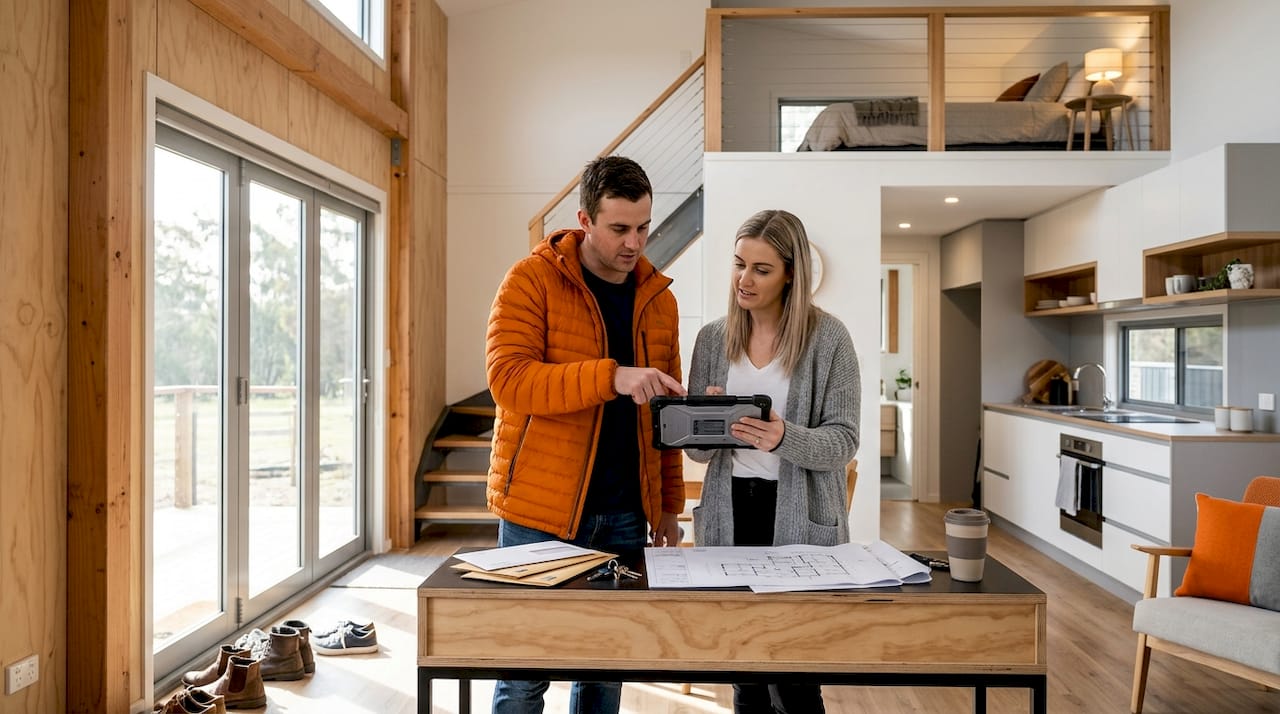
Two-storey and lofted configurations are where shed home design genuinely comes into its own. The logic is straightforward. Lofted sleeping areas can recover 80 to 120 sq ft in small sheds, allocating that floor space back to living, dining, and kitchen functions where you actually spend your waking hours.
The standard approach, and the one that works best in practice, is to keep kitchen, bathroom, and main living on the ground floor, with sleeping or a home office above. A 16×32 layout with two sleeping areas, a full kitchen, and a proper bathroom on this split model supports genuinely flexible living for couples or small families.
Staircase and access options
Your choice of staircase has a disproportionate impact on how much usable floor area you retain on both levels.
- Floating stairs with open risers are the most space-efficient option for sheds with ceiling heights above 2.7 metres. They also preserve sightlines and keep the space feeling open.
- Ship’s ladders (alternating tread stairs) are the most compact solution available, reducing the floor footprint by up to 40% compared to a conventional staircase. They suit lofts used primarily for sleeping.
- Pull-down loft access is the most extreme space-saver, appropriate only for storage lofts or occasional-use sleeping areas.
Loft design principles
| Consideration | Recommended approach |
|---|---|
| Headroom | Minimum 1.8 metres at the sleeping surface; 2.1 metres preferred |
| Railing style | Open cable or glass railings preserve sightlines and airiness |
| Storage | Labelled bins and clear paths prevent lofts becoming unusable clutter zones |
| Lighting | Recessed downlights or wall-mounted reading sconces to avoid ceiling clearance issues |
Double-height ceilings on the ground floor, even where a loft occupies only part of the upper volume, create a sense of scale that makes the whole interior feel more generous. Pairing this with an outdoor patio or covered porch accessed from the living area extends the functional footprint further without adding to your building’s enclosed area.
Pro Tip: If your loft is accessed by a ship’s ladder, install a small shelf or hook at the top of the ladder for a phone, book, or glass of water. It sounds trivial. In daily use, it is the difference between a loft you enjoy and one you merely tolerate.
4. Popular interior design styles for shed homes
Choosing a style is not purely an aesthetic exercise. Your chosen look directly shapes which furniture you select, how you arrange it, and how efficiently the space functions. Here is a practical comparison of the most compatible styles for shed conversion living.
| Style | Key characteristics | Best suited to |
|---|---|---|
| Scandinavian minimalist | Light tones, clean lines, functional simplicity | Single-level open-plan layouts |
| Industrial | Exposed beams, metal accents, durable finishes | Larger footprints with high ceilings |
| Rustic cabin | Warm timber, stone accents, layered textiles | Lofted layouts in rural settings |
| Modern micro-home | Built-ins, smart technology, premium finishes | Compact two-storey configurations |
| She shed | Craft or garden focus, soft furnishings, personal collections | Single-room or studio layouts |
A few observations worth making here. The industrial style, with its purposeful interior layouts and emphasis on durable, low-maintenance finishes, suits steel frame shed homes particularly well. The material honesty of exposed steel and concrete complements the structure rather than fighting it.
The modern micro-home style demands the most upfront investment but delivers the highest functional density. Built-in joinery that serves multiple purposes, smart lighting controls, and premium compact appliances all contribute to a space that punches well above its square metreage. For those building a Class 1A engineered steel kit home as a long-term primary residence, this style rewards the investment most directly.
5. Practical tips to optimise shed interiors for comfort
The difference between a shed interior that works and one that merely looks good often comes down to a handful of decisions made before the walls go up.
- Use mirrors and light colours strategically. A full-length mirror on one wall of a narrow shed can visually double the perceived width. Pale wall colours reflect both natural and artificial light, reducing the need for additional lighting fixtures.
- Layer your artificial lighting. Ambient overhead lighting alone creates a flat, institutional feel. Add task lighting at the kitchen bench and desk, and accent lighting in shelving niches or along toe-kicks, to create depth and warmth.
- Plan ventilation before insulation. Vent routing is best decided early; retrofitting after insulation and wall finishing is disruptive and expensive. Tightly insulated sheds without proper ventilation trap moisture, leading to structural damage and health issues over time.
- Place electrical outlets based on intended use. Think through where you will actually use a laptop, charge a phone, or plug in a lamp. Outlets positioned for a generic layout will frustrate you daily in a purpose-built shed home.
- Avoid clutter through disciplined zoning. Assign every item a zone and every zone a storage solution before you move in. A shed interior that starts organised stays organised far more easily than one that accumulates clutter over time.
The most overlooked tip of all: plan infrastructure and layout before closing walls. Plumbing runs, electrical placement, and electrical rough-in must align with your floor plan from the start. Changes after wall finishing are costly, time-consuming, and entirely avoidable.
My honest take on shed home layouts
I’ve seen a consistent pattern in how people approach shed home interiors, and it rarely serves them well. Most start with the aesthetic and work backwards to the layout. The result is a beautifully styled space that is genuinely uncomfortable to live in because the circulation paths are awkward, the loft is inaccessible after six months, or the bathroom feels like an afterthought.
What I’ve learned is that vertical space and circulation flow are the two most underestimated factors in shed interior design. Everyone focuses on storage and style. Almost no one draws their daily movement path through the space before committing to a layout. That single exercise, done honestly, will reveal more problems than any amount of mood-boarding.
The other hard truth: lofts become clutter zones unless you design them with the same rigour you apply to the ground floor. Labelled storage, planned access, adequate headroom, and proper lighting are not optional extras. They are what separates a loft you use from one you avoid.
Custom furniture transformed the shed interiors I’ve seen work best. A built-in window seat with drawers underneath, a fold-down dining table on a wall bracket, a bed platform with integrated storage beneath. These are not luxury additions. They are the practical architecture of a well-lived compact space.
Start with a detailed layout plan. Not a rough sketch. A properly dimensioned floor plan that accounts for furniture, circulation, plumbing, and light. The time you invest there pays back every single day you live in the space.
, Shed
Design your shed home with confidence
If you are ready to move from layout ideas to a real build, Shed-homes offers Australian-made steel frame kits with precision-engineered plans that take the guesswork out of the process. Every design comes with detailed architectural specifications and clear pricing, so you can approach council approvals with certainty rather than anxiety.
Whether you are drawn to a single-level open plan or a split-level two-storey design, Shed-homes has approval-ready configurations to match. The full range of Class 1A designs covers everything from compact acreage retreats to full family residences. Explore the complete collection at Shed-homes and find the layout that fits your land, your life, and your budget.
FAQ
What is the best layout for a small single-level shed home?
An open-concept arrangement combining kitchen, dining, and lounge in one zone works best for small shed homes. Placing the kitchen and bathroom on the same wall minimises plumbing runs and maximises usable living space.
How much space can a lofted sleeping area recover?
Lofted sleeping areas can recover between 80 and 120 sq ft in a small shed, freeing the entire ground floor for kitchen, bathroom, and living functions.
Do I need a building permit to convert a shed into a home in Australia?
Yes. Most Australian councils require building permits, zoning approval, and occupancy certification before a shed can legally function as a dwelling. Understanding the Class 1A versus Class 10A classification is the first step.
What staircase option saves the most floor space in a two-storey shed?
A ship’s ladder (alternating tread stair) reduces the floor footprint by up to 40% compared to a conventional staircase, making it the most space-efficient option for lofted shed homes.
When should ventilation be planned in a shed home build?
Ventilation pathways should be planned and roughed in before insulation is installed. Retrofitting vents after wall finishing is costly and disruptive, and a tightly sealed shed without proper airflow will develop moisture problems over time.
Recommended
Ready to start planning your shed home?
Use our free Online Designer to design your layout, or send us an enquiry and we’ll get back to you with an obligation-free quote based on your site address.