

Adding a carport to your shed home is one of the simplest and most practical additions you can make. It shares the structural steel of your main building, so it’s engineered as part of the same system, not a dodgy lean-to bolted on later. Here’s what you need to know about design, approvals, and costs.
What is a carport attached to shed homes?
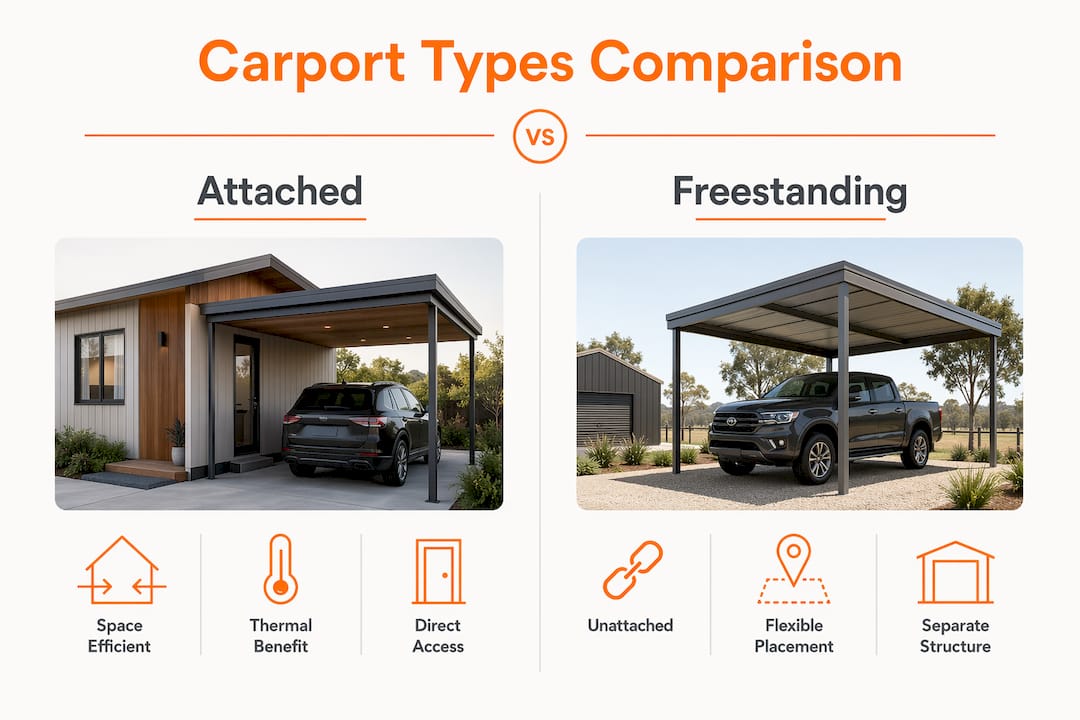
An attached carport is defined as a covered parking structure that connects directly to the exterior wall of a shed home, rather than standing independently on its own footings and frame. Typical sizes range from roughly 3.6 metres to 9 metres wide and 6 metres to 9 metres long, making them adaptable to single or double vehicle configurations on most standard Australian residential blocks. That size range matters because it determines both the structural load transferred to the shed wall and the type of council approval you will need before breaking ground.
The distinction between an attached carport and a freestanding one is not merely cosmetic. A freestanding carport sits on its own independent posts and footings, with no structural relationship to the home. An attached carport, by contrast, transfers lateral and vertical loads through a ledger board or direct frame connection into the shed wall. This shared structural relationship is what makes the attached version more space-efficient, but it also introduces engineering and compliance obligations that a freestanding structure does not carry.
In the Australian context, shed homes built from Class 1A engineered steel kit frames, such as those offered by Shed-homes, are particularly well suited to carport attachments. The steel frame provides a reliable, calculable connection point for the carport structure, removing much of the guesswork that plagues timber-framed additions. The result is a carport shed combination that feels architecturally deliberate rather than bolted on as an afterthought.
What design options exist for attached carports on shed homes?
Carport and shed combinations come in three primary configurations: full structural integration, lean-to side attachment, and a closely positioned but technically separate structure. For shed homes, the lean-to attachment is the most practical and cost-effective of these, using the shed’s existing wall as one side of the carport enclosure.
Roof style is the first design decision that shapes everything else:
- Skillion roof: A single-pitch roof that slopes away from the shed wall. It sheds water efficiently, suits contemporary steel aesthetics, and is the simplest to connect structurally.
- Gable roof: A pitched roof with a central ridge running parallel or perpendicular to the shed. It offers more headroom and visual presence, though it requires more complex framing at the connection point.
- Flat roof: Technically a very low-pitch skillion. Suitable for warmer, drier climates where heavy rainfall is infrequent, but requires careful drainage planning.
Material choice follows logically from the shed home’s existing construction. Steel and aluminium are the dominant options in Australian residential carport design, with steel offering superior load capacity and aluminium providing corrosion resistance in coastal environments. Timber framing remains an option for heritage or rural aesthetics, though it requires more maintenance and is less compatible with steel-framed shed homes from a structural connection standpoint.
Visual harmony deserves more attention than most builders give it. A carport that matches the shed home’s roofline pitch, wall cladding colour, and fascia profile reads as a deliberate architectural feature rather than a functional add-on. Shed-homes designs allow for customisation of cladding and roof pitch across the main structure and any attached carport, which means the two elements can be specified together from the outset rather than retrofitted later.
Pro Tip: Specify your attached carport in the same design session as your shed home kit. Matching roof pitch, cladding profile, and colour at the planning stage costs nothing extra and adds measurable kerb appeal.
What are the benefits of attaching a carport to a shed home?
The core advantage of an attached carport over a freestanding structure is space efficiency. Attached carports use existing driveway space and share one structural wall with the home, meaning you recover the footprint that a freestanding carport’s fourth post and independent footing would otherwise consume. On a compact Australian residential block, that recovered space is genuinely valuable.
The table below compares the three main vehicle shelter options available to shed home owners:
| Feature | Attached carport | Freestanding carport | Enclosed garage |
|---|---|---|---|
| Space efficiency | High. Shares shed wall | Moderate. Requires own footprint | Low. Largest footprint |
| Construction cost | Lower than garage | Lower than garage | Highest |
| Weather protection | Good. Three sides sheltered | Moderate. Open on all sides | Best. Fully enclosed |
| Thermal shading benefit | Yes. Shades shed wall | No | Partial |
| Council approval required | Almost always | Often | Always |
| Integration with shed home | Seamless | Separate structure | Separate structure |
Beyond space, attached carports provide sheltered direct access from vehicle to home, which is a practical daily benefit that freestanding options cannot match. Walking from a freestanding carport to your front door in a Queensland downpour is a different experience from stepping directly from your car into a covered transition zone connected to the building.
There is also a thermal benefit that rarely appears in marketing material. An attached carport roof shades the exterior wall of the shed home it connects to, reducing solar heat gain through that wall during summer. For a steel-framed home with a NatHERS energy rating to maintain, this passive shading effect contributes meaningfully to thermal performance without adding any mechanical complexity.
What permits and safety rules apply in Australia?
Local council development approvals and building permits are non-negotiable steps for attached carports in Australia. The attached nature of the structure, combined with its proximity to a Class 1A dwelling, places it firmly within the scope of the National Construction Code and most state planning schemes. The following steps reflect the standard compliance pathway:
- Check your local planning scheme. Zoning rules set minimum setbacks from property boundaries, maximum site coverage percentages, and height limits. An attached carport that breaches a side boundary setback will not receive approval regardless of how well it is built.
- Engage a private building certifier or your local council. Most states allow private certification for straightforward residential additions. A certifier will assess your plans against the Building Code of Australia and issue a building approval before work begins.
- Commission engineering drawings. Because the carport transfers loads into the shed home’s frame, a structural engineer must confirm the connection design. This is not optional for an attached structure.
- Address drainage requirements. Carport roofs collect significant rainfall. Your approval will require a drainage plan showing how stormwater is directed away from the structure and the property boundary.
- Obtain final inspection sign-off. Once construction is complete, a certifier inspects the work and issues a certificate of occupancy or compliance, which you need for insurance and future property transactions.
Fire safety is the regulatory consideration most often underestimated. Carport fires can be highly destructive to adjacent homes, and treating an attached carport as a low-risk outbuilding is a dangerous assumption. Vehicles contain fuel, oil, and electrical systems that can ignite without warning. Installing a garage-rated fire detector in the carport space and maintaining fire separation between the carport and any habitable room in the shed home are both prudent and, in many jurisdictions, mandatory.
Pro Tip: Request a pre-lodgement meeting with your local council before finalising your carport design. Many councils offer this free service and it can identify setback or drainage issues before you spend money on engineering drawings.
How do you plan and build an attached carport effectively?
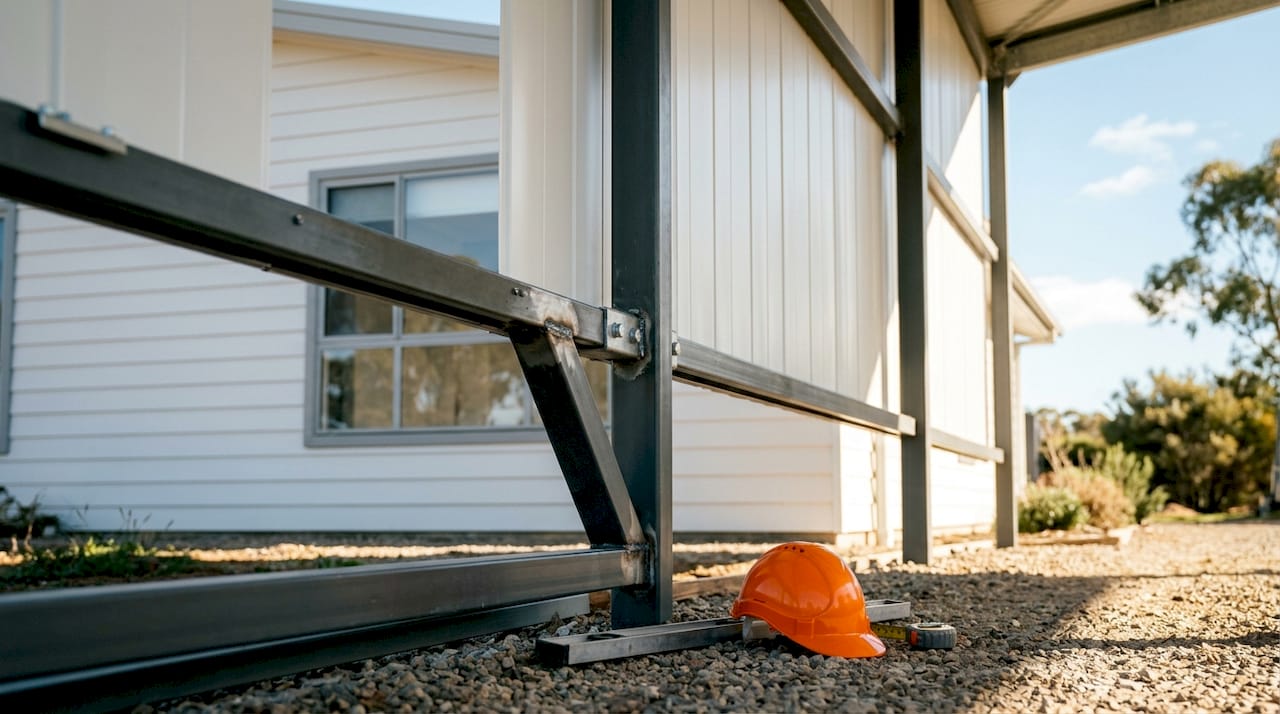
The structural connection between carport and shed home is the single most consequential decision in the entire build. A ledger board bolted into the shed frame, combined with concrete footings for the open-side posts, is the standard engineering solution. The ledger board must be fixed into structural members of the shed wall, not just into cladding or infill framing. Getting this wrong risks the entire carport separating from the building under wind load.
Metal carport attachments to steel-framed homes also require careful management of the existing roof overhang and gutter line. The carport roof must connect above or below the shed’s gutter without blocking water flow or creating a dam point where debris accumulates. Installers who skip this detail create ongoing maintenance problems and potential water ingress into the shed home’s wall cavity.
The professional versus DIY question deserves a direct answer. Single or double carport kits can be assembled in one to two days by a competent owner-builder, but the structural connection to a Class 1A dwelling requires licensed trades and engineering sign-off in most Australian states. The kit assembly itself may be within DIY capability; the attachment, footing, and electrical work generally are not. Attempting to self-certify an attached structure to save money is the kind of short-term thinking that creates long-term liability.
Common construction challenges and their solutions include:
- Misaligned roof pitches: Resolve at the design stage by specifying the carport pitch to match or complement the shed home roof. Retrofitting a pitch change is expensive.
- Inadequate footing depth: Concrete footings for carport posts must meet the minimum depth specified by your structural engineer, which varies by soil classification. Underdepth footings are a common defect in DIY carport installations.
- Gutter interference: Plan the carport fascia height so the carport gutter sits below the shed home’s existing gutter outlet, allowing water to flow freely into a single drainage point.
- Cladding gaps at the connection: The junction between carport roof and shed wall must be flashed and sealed to prevent water penetration. This detail is often omitted in budget installations and causes wall damage within two to three wet seasons.
Bottom lines
An attached carport is the most space-efficient and thermally beneficial vehicle shelter option for shed home owners, provided the structural connection, drainage, and council approvals are addressed from the outset.
| Point | Details |
|---|---|
| Definition is precise | An attached carport shares structural load with the shed home wall, unlike a freestanding structure. |
| Design choices matter early | Roof pitch, cladding, and colour should be specified alongside the shed home kit, not retrofitted later. |
| Permits are mandatory | Council approval, engineering drawings, and certifier sign-off are required before construction begins. |
| Fire safety is underestimated | Garage-rated fire detectors and fire separation from habitable rooms are both prudent and often legally required. |
| Connection detail is critical | A correctly engineered ledger board and concrete footings determine the long-term structural integrity of the carport. |
Why early planning is the only strategy that works
From working across dozens of shed home builds, the pattern is consistent. Owners who treat the attached carport as a phase-two addition almost always pay more and wait longer than those who include it in the original design brief. The reason is structural. Once a shed home is built and clad, retrofitting a carport connection requires cutting into finished wall panels, potentially relocating gutters, and commissioning new engineering drawings for a structure the original engineer never assessed. That is three separate cost events that a single integrated design would have avoided entirely.
The other mistake I see repeatedly is underestimating the regulatory timeline. Council approvals for attached structures in residential zones can take four to twelve weeks depending on the local authority and the complexity of the application. Owners who begin construction before approval is granted face stop-work orders and, in some cases, demolition requirements. The financial and emotional cost of that outcome is entirely avoidable.
What genuinely surprises people is how much the thermal shading benefit matters in practice. A well-positioned attached carport on the western wall of a shed home can reduce afternoon heat load through that wall by a meaningful margin, which translates directly into lower cooling costs and a better NatHERS rating. That is not a soft benefit. It is a calculable, bankable outcome that adds to the long-term value of the asset.
The rational approach is to treat the attached carport as an integral component of the shed home design, not an accessory. Specify it early, engineer it properly, approve it through the correct channels, and build it once. That is the approach that protects both your investment and your daily quality of life.
, Shed
Build your shed home with an integrated carport from day one
Shed-homes designs Class 1A steel frame kit homes with the flexibility to incorporate attached carports as part of the original build specification, not as an afterthought. Every kit includes precision-engineered architectural plans that satisfy council approval requirements, removing the uncertainty that derails most owner-builder projects.
The approval-ready build process at Shed-homes means your carport attachment is engineered, documented, and compliant from the first drawing. You receive clear pricing, detailed specifications, and a build timeline that can reach lock-up stage in as little as three to six weeks. If you are planning a shed home and want a carport that works structurally and aesthetically from day one, explore the full range of customisable shed designs at shed-homes.com.au.
FAQ
What is a carport attached to a shed home?
An attached carport is a roofed, open-sided parking structure fixed directly to an exterior wall of a shed home, sharing structural support with the building. It differs from a freestanding carport in that it transfers load through a ledger board connection into the shed frame.
Do I need council approval for an attached carport in Australia?
Yes. Building approvals from certifiers are typically required for attached carports in Australia, covering structural engineering, site setbacks, and drainage compliance. Approval requirements vary by state and local council, so check your local planning scheme before commencing any work.
What materials are best for a carport shed combination?
Steel and aluminium are the most practical materials for attached carports on Australian shed homes, offering durability, low maintenance, and compatibility with steel-framed construction. Steel provides superior structural capacity; aluminium suits coastal environments where corrosion resistance is a priority.
How does an attached carport improve a shed home’s thermal performance?
An attached carport roof shades the exterior wall it connects to, reducing solar heat gain through that wall during summer. This passive shading effect supports a better NatHERS energy rating and reduces mechanical cooling loads without adding any running costs.
What is the biggest construction risk with attached carports?
The structural connection between the carport and the shed home wall is the highest-risk element. Improper attachment risks structural failure under wind load, and engineering expertise is recommended to specify the correct ledger board fixing and footing depth for your soil classification and wind region.
Recommended
- Shed Home Build Process | Approval Ready Kits
- Disability Access in Shed Homes | Accessible Living
- Shed House Australia, Steel Frame Kits | Shed Homes
- Class 1a vs Class 10a Shed Homes Explained
Ready to start planning your shed home?
Use our free Online Designer to design your layout, or send us an enquiry and we’ll get back to you with an obligation-free quote based on your site address.